
Common Appliance Problems in Medford Homes
When a washing machine starts leaking in a basement laundry room on a Saturday morning, the water has nowhere to go but across the concrete floor and toward anything stored nearby. In a Medford triple-decker, that basement washer often serves multiple units, and a single drain backup can affect the whole building fast.
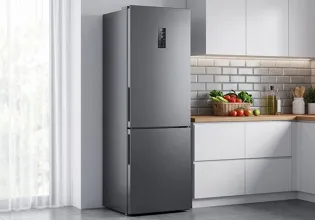
- Refrigerators that stop cooling — often the condenser coils are caked with dust, especially in older kitchens where the fridge sits tight against a wall with almost no clearance behind it.
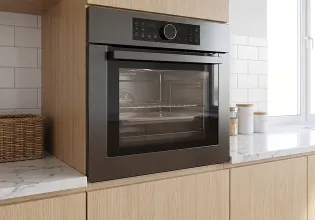
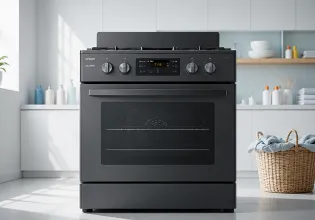
- Gas stoves or ovens that won't ignite or heat unevenly. We usually see this in homes where the igniter has worn out gradually, and the homeowner has been lighting burners manually for weeks before calling.
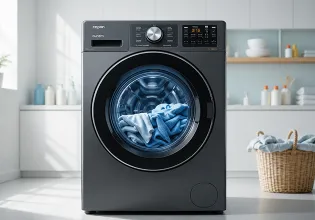
- Washers that won't drain or shake hard enough to walk across the floor. In many Medford apartments, the machine sits on an uneven surface in a shared basement, and leveling legs haven't been adjusted in years.
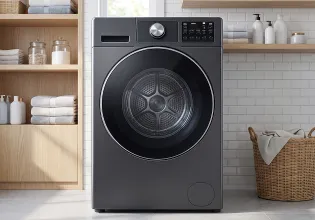
- Dryers that run a full cycle but clothes come out damp — a warning sign worth taking seriously, since lint buildup in a long vent run is a fire hazard, not just a nuisance.
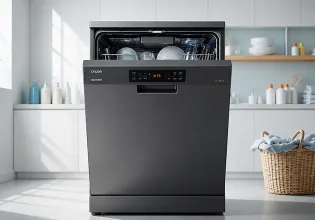
- Dishwashers leaving dishes cloudy or standing water in the tub after a cycle. Mineral scale from the local water supply can slowly clog spray arms and filters.
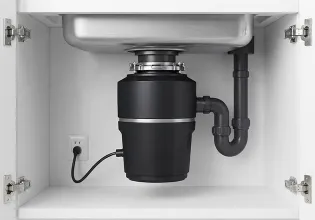
- Garbage disposals that jam or hum without spinning, often because a piece of bone or a small utensil dropped in.
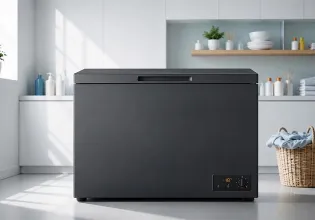
- Freezers building up heavy frost on the back wall or warming into the danger zone, sometimes because a door gasket has lost its seal.
Local Utility, Permit, Safety, and Disposal Factors in Medford
If an appliance job in Medford touches a gas line, a water connection, or an electrical circuit, there is almost always a permit involved. The city does not treat these as optional. Gas permits are required for any gas appliance installation or replacement — stoves, ovens, gas dryers — and the work has to be done before the installer starts, not filed after the fact. The same applies to plumbing permits for dishwashers, washing machines, and garbage disposals when the job involves water supply or drain connections. Electrical permits come into play whenever an appliance needs a new or altered circuit. You can verify requirements or ask questions through the Medford Inspectional Services Division.
What does that mean for you as a homeowner? Before anyone hooks up a new gas range in your kitchen, ask whether they've pulled the permit. A city inspector will need to sign off on the work. Skipping that step isn't just a paperwork issue — under the Massachusetts State Plumbing and Gas Fitting Code, unlicensed gas or plumbing work on appliances is a state code violation. If something goes wrong later, unpermitted work can complicate insurance claims and resale inspections.
Inspectional Services Division
85 George P. Hassett Drive
Medford, MA 02155
Phone: (781) 393-2435
Official Website
Medford's water comes through the Massachusetts Water Resources Authority, sourced from the Quabbin and Wachusett reservoirs. The mineral content in MWRA-supplied water can contribute to scale buildup inside dishwashers, washing machines, and the small water lines feeding refrigerator ice makers. Over time, that scale narrows inlet valves and clogs filters. If your dishwasher has been leaving a white film on glasses or your fridge water dispenser has slowed to a trickle, mineral deposits are a likely cause. Cleaning inlet screens and running a descaling cycle periodically helps, but sometimes the valve itself needs replacing.
Gas appliances bring fire and carbon monoxide risks that the city takes seriously. The Medford Fire Department enforces fire prevention rules covering gas stove and oven installations, and Massachusetts law under the Massachusetts Comprehensive Fire Safety Code requires carbon monoxide detectors in every residential unit with a fossil-fuel-burning appliance. If you have a gas dryer, stove, or boiler, check that your CO detectors are current. A malfunctioning gas appliance — a burner that produces a yellow flame instead of blue, or an oven that smells like gas when it shouldn't — is something to address immediately, not next week.
Dryer lint buildup is another recognized fire hazard. In older Medford homes, the dryer vent often runs a long path through a basement wall or up through a floor before reaching the exterior. The longer the run, the more lint collects, and the harder the dryer works to push air out. That extra strain shortens the heating element's life and raises the fire risk. Cleaning the full vent path — not just the lint trap — is basic maintenance that too many homeowners skip.
When an appliance is beyond repair, you can't just drag it to the curb on trash day. Medford does not collect large appliances during regular trash pickup. Instead, you need to schedule a separate appointment through the Medford bulky item pickup program run by the Department of Public Works. Refrigerators and freezers require special handling because of refrigerant — federal EPA rules apply. Plan ahead, because the pickup won't happen the same day you call.
What Makes Appliance Repair in Medford Different
Medford's housing stock is a mix of older single-family homes, multifamily triple-deckers, condos carved out of former Victorians, and apartment buildings near Wellington and along the Mystic River. That mix means a technician might work in a renovated condo kitchen with modern hookups in the morning and then spend the afternoon in a third-floor apartment where the gas shutoff valve is in the basement and the only way to move a dryer is down a narrow back staircase. Not every building is set up the same way, and the access path shapes the job as much as the appliance itself.
The permit structure also sets Medford apart from towns that handle inspections more loosely. Here, gas, plumbing, and electrical permits all run through the same Inspectional Services Division, and the city requires permits to be pulled before work begins — not retroactively. For a homeowner replacing a gas stove and a dishwasher at the same time, that can mean two separate permits and two inspections. It adds time, but it also means the work gets checked. Combined with the appointment-only bulky item pickup for old appliances, a straightforward replacement job in Medford involves more coordination than it would in a town with curbside appliance collection and lighter permitting.
Appliance Replacement and Household Equipment Considerations in Medford
When repair no longer makes sense — the compressor on a fifteen-year-old refrigerator fails, or a washer's transmission gives out — the replacement process in Medford has a few steps that are easy to overlook. Start with the old unit. You'll need to call the Department of Public Works at (781) 393-2417 to schedule a bulky item pickup appointment. The DPW does not accept large appliances during regular collection, and refrigerators or freezers containing refrigerant must be handled according to federal EPA regulations before they can be picked up. Don't assume the delivery crew for your new appliance will haul the old one away — confirm that in advance.
Department of Public Works
85 George P. Hassett Drive
Medford, MA 02155
Phone: (781) 393-2417
Official Website
The new appliance itself may trigger permit requirements. Swapping a gas range for the same type usually still requires a gas permit through the Inspectional Services Division — the installer has to pull it before connecting the new unit. If you're switching from electric to gas, or adding a dishwasher where there wasn't one before, expect plumbing and possibly electrical permits as well. Ask the installer to confirm the permit number before they start. Under the Massachusetts State Plumbing and Gas Fitting Code, gas fitting work requires a licensed gas fitter regardless of the scope.
In multifamily buildings and condos, there's often an extra layer. You may need to coordinate with a landlord or condo association for access to shared gas shutoffs, basement utility rooms, or building common areas. Some condo buildings require advance notice or even elevator reservations for large appliance deliveries. Check before scheduling.
Medford residents are also protected under Massachusetts Consumer Protection Law Chapter 93A, which prohibits unfair or deceptive trade practices. If a repair company misrepresents what's wrong with your appliance or inflates a bill, you have the right to file a complaint with the Massachusetts Attorney General's Office.
Areas We Serve Throughout Medford
We handle appliance repair calls across every part of Medford. Here's a look at the neighborhoods we serve most often:
- West Medford — Many older single-family homes here have basement laundry setups with original drain lines. Washer drainage problems are common, and sometimes the issue is a partially collapsed cast-iron pipe rather than the machine itself.
- South Medford — Dense with multifamily properties close to the Somerville line. We often work in kitchens where the stove, fridge, and dishwasher are all within arm's reach, and pulling one appliance out means temporarily disconnecting another.
- Medford Hillside — Dryer vent runs in these hillside homes tend to be longer than average because the exterior wall isn't always on the same floor as the laundry. Worth checking your vent path if drying times have been creeping up.
- Wellington — A mix of apartments and condos near the Wellington T station. Access can be tricky — tight hallways, no freight elevator, and street parking that makes it hard to unload parts. We plan around it.
- Fulton Heights — Mostly residential with a mix of older homes and some newer construction. Gas stove and oven repairs come up frequently here, and the shutoff valve is usually in the basement — good to know where yours is before a repair visit.
- Lawrence Estates — Mid-century homes with original kitchen layouts that often have limited counter and cabinet clearance around appliances. Replacing a built-in dishwasher sometimes means adjusting the countertop or trimming cabinetry to fit a newer model's dimensions.